
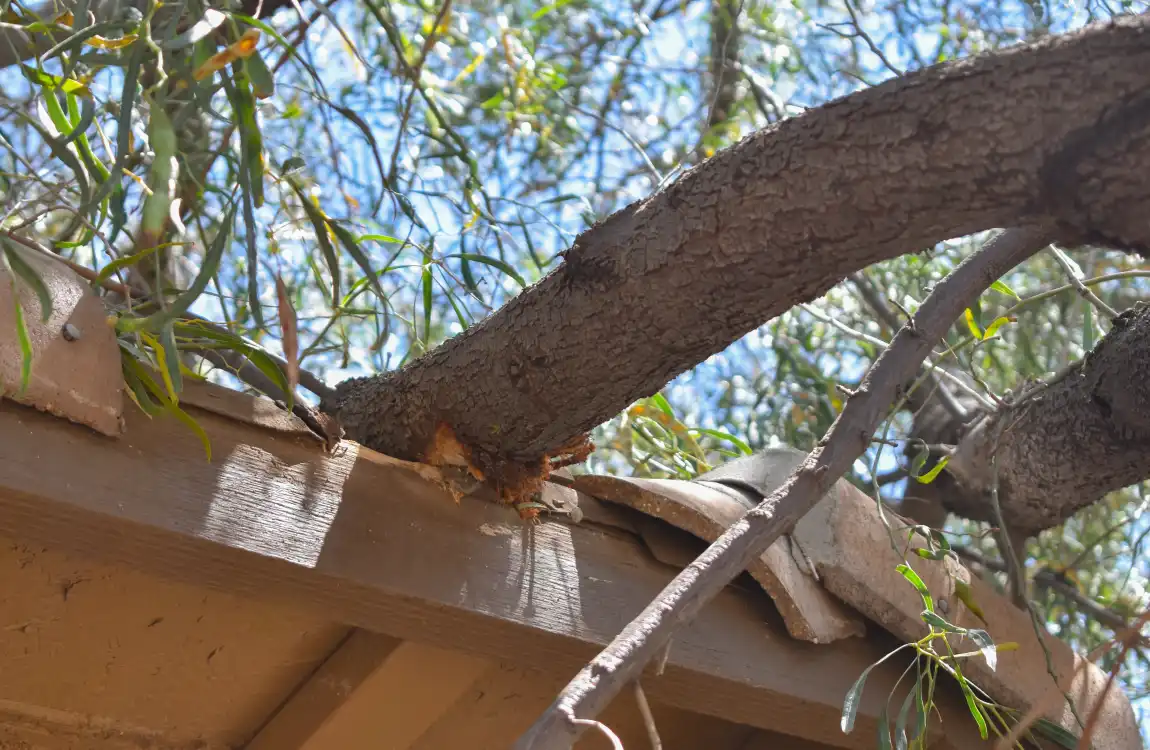

You heard the wind whistling outside as a storm came through overnight. And when you wake up, you find that a tree has fallen on part of your house. So, what happens now? The first question on your mind other than “how much is this going to cost?” is probably, “will my homeowners insurance cover the damage?” Here’s everything you need to know about home insurance for tree damage and what is — and may not be — covered.
When Does Homeowners Insurance Cover Fallen Tree Damage?
Whether or not your homeowners insurance covers fallen tree damage depends on how the tree fell, but typically, homeowners insurance covers any structure on your property after a covered event.
Covered events like storms, wind, and lightning
Most standard homeowners insurance covers tree damage caused by sudden, unexpected events, such as hurricanes, tornadoes, windstorms, or even lightning strikes. If a tree falls due to a covered peril, your policy will typically pay to repair any resulting damage.
Damage to your home, garage, or other structures
The good news is that your homeowners insurance will likely cover other structures on your property beyond your main house. Detached structures like garages, sheds, or fences may also be covered if a tree falls on them. The resulting payout, however, usually depends on your policy’s dwelling and other structure limits.
Does Homeowners Insurance Cover Tree Removal?
Homeowners insurance may cover a portion of tree removal, but that will also depend on a few factors. “Insurance is meant to protect against sudden damage, not gradual issues,” says Larry Anderson, Director, UW Ops. “Keeping trees healthy and monitoring their condition is key to ensuring coverage if a storm strikes.”
Typical coverage limits for tree removal
Policies often include limited coverage for tree removal, commonly up to $500 per incident. Some insurers may increase this limit if multiple trees fall during a single storm or if the trees block essential access to your home.
Conditions that must be met for removal coverage
For removal to be covered, the tree usually must have caused damage to a covered structure or be blocking access. Simply cutting down a healthy tree as a precaution is not covered under standard homeowners insurance.
Common Situations When Tree Damage May Not Be Covered
There are situations where your homeowners insurance policy will not cover tree damage, and it’s largely due to maintenance issues.
Lack of maintenance or neglect
If damage occurs because a tree was rotting, diseased, or poorly maintained, insurers may deny the claim. Neglecting routine inspections or failing to remove hazardous trees can leave you responsible for repair costs.
Trees that fall without causing property damage
Even if a tree falls on your property but does not strike a covered structure, standard homeowners insurance usually doesn’t cover removal costs. Also, if a tree falls on your car as a result of a storm, your comprehensive car insurance, not your homeowners, will likely cover the damages. Check with your insurance agent before filing a claim, however.
How to Help Prevent Tree Damage to Your Home
Fortunately, you can mitigate most tree damage to your home with some preventive steps.
Inspect and maintain trees on your property
Regularly check your trees for signs of decay, weak branches, or leaning trunks. Pruning dead limbs or those that hang over your home and consulting an arborist for risky trees can also reduce the likelihood of storm damage.
Prepare your home for severe weather
Trim overhanging branches near your house, secure outdoor furniture, and consider reinforcing vulnerable structures. Proper preparation minimizes damage and can help streamline insurance claims if a tree does fall as a result of wet weather or a windstorm.
What to Do If a Tree Falls on Your Home
If a tree does fall on your home, acting quickly and safely can help minimize damage and streamline the insurance claims process.
Immediate safety steps
Safety is of the utmost importance, whether a tree causes damage to a bedroom or an unoccupied outbuilding.
- Ensure everyone remains safe.
- Evacuate the home if necessary.
- Avoid touching any downed powerlines or unstable debris, like tree limbs or pieces of wood, bricks, or roofing from your home.
- Secure the area until you have professionals out to assess the damage.
Filing a homeowners insurance claim
Once you’ve ensured all your home’s occupants are safe, document the damage with photos and videos, and contact your insurance provider as soon as possible. An adjuster will assess the situation, including both structural damage and potential tree removal costs, and guide you through the claims process.
Tree damage to your home can be scary, but Mercury is here to help with 24/7 claims and the support you need to get the coverage to keep your family and property safe and secure. Contact us today to discuss your homeowners coverage.
FAQs About Fallen Trees and Insurance Coverage
If my neighbor’s tree falls on my house, whose insurance pays?
Typically, your homeowners insurance covers tree damage to your own property, but your insurer may seek reimbursement from your neighbor’s policy if negligence contributed to the tree’s fall.
Does insurance cover damage from tree roots?
Damage from tree roots is usually considered a maintenance issue and is, therefore, not covered by standard homeowners insurance. Only sudden events, such as a root causing a tree to topple during a storm, would typically be covered.
Are fences or sheds covered if a tree falls on them?
Yes, detached structures like fences or sheds are often covered, but the payout is subject to your policy’s limits for “other structures,” which may be lower than your main dwelling coverage. Check with your insurance provider if you have detached buildings or fences.

Larry Anderson is the Director of Underwriting Operations for Mercury Insurance, where he leads several teams including Audit, Training, and Regulatory Compliance. Anderson has been with Mercury since 2002 when he began as an underwriter. Anderson received his Bachelor of Arts degree in Business Administration from California State University, Fullerton.

The Mercury Marketing Team is made up of professionals in the fields of Content Creation, Public Relations, Social Media and Journalism. The team works together to deliver professionally written and researched content to provide information for consumers.