


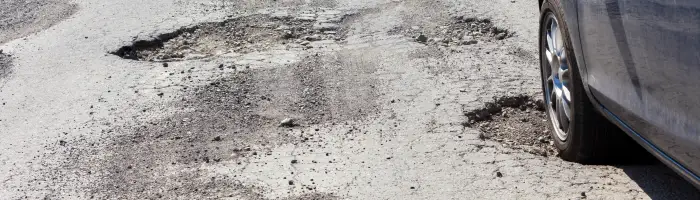
You’re on the road and you feel that sickening “thunk” that comes when you hit a pothole. As you continue to drive, you notice that your car seems a little “off,” and when you finally come to a stop, you get out and realize your tire has been damaged.
The question is: What happens next? “Your car insurance may cover the vehicle damage caused by hitting a pothole,” explains Justin Yoshizawa, Senior Director, Product Management. “But it’s going to depend on what type of coverage you have and what your policy allows. For instance, your standard liability insurance likely won’t cover the pothole tire damage, but collision coverage will.” Here’s what you should consider before filing a claim with your car insurance.
What Type of Car Insurance Covers Pothole Damage?
Collision coverage applies when your car incurs damage, regardless of fault. It could be a collision with another vehicle, or it could provide coverage should you back into a tree or hit a pothole. Keep in mind that collision coverage is a separate add-on, and it’s not mandatory under any state laws. If you’re leasing or financing a vehicle, your lender may require you to carry collision insurance throughout the life of the loan.
What Types of Pothole Damage May Be Covered?
Collision insurance can cover a whole host of repairs or replacements after you hit a pothole and damage your car. Your insurance coverage may include pothole-related damages like bent rims, blown tires, damaged shocks or struts, misalignment as a result of the impact, and any body damage to the vehicle. Keep in mind that coverage depends on your specific policy and deductible, and normal wear and tear or pre-existing issues typically aren’t included.
Should You File an Insurance Claim for Pothole Damage?
If your vehicle has been damaged by a pothole, filing an insurance claim may help you access the benefits available under your collision coverage. Whether coverage applies will depend on the extent of the damage, the estimated repair cost, your deductible, and the terms of your policy.
A claim may be especially helpful when the repair cost exceeds your deductible, such as when a pothole damages your vehicle’s suspension, undercarriage, wheels, or tires. If you’re unsure about the extent of the damage or how your coverage applies, contact your insurer’s claims department. A claims professional can review the incident, explain your coverage, and guide you through the next steps.
Whether you’re deciding when to file a claim or simply looking for better protection that balances value with affordability, Mercury can help you find auto insurance that works for your needs.
Get started with a fast, free quote.
What to Do After Hitting a Pothole
So you’ve hit a pothole, and now you’re worried about what you may find when you exit your vehicle. Here’s how to safely assess the damage and the steps you need to take after.
Step 1: Check Your Tires, Wheels, and Vehicle for Damage
Once it’s safe to do so, exit the vehicle and inspect for visible or noticeable signs of pothole tire damage before you continue to drive.
Step 2: Document the Pothole and Vehicle Damage
When you find a minor dent or a major issue, immediately document the damage to your vehicle and the scene, if it’s safe to do so. Take photos and videos of the damage, the pothole if you can, and any other road conditions or relevant details that could help in the event of filing a claim. For example, if it was foggy that day and you didn’t see the pothole in time, snapping photos and videos of the scene can help provide more context and evidence for a claims adjuster.
Step 3: Get a Repair Estimate
Take the vehicle to a repair shop to determine the extent of the damage and get an estimate. Once you have that in hand, you can decide whether to proceed with a claim or simply pay for repairs out of pocket.
FAQs
Does comprehensive insurance cover pothole damage?
No, comprehensive insurance typically doesn’t cover pothole damage. Hitting a pothole is considered a collision with an object, so collision coverage, not comprehensive, would apply to repairs. Comprehensive coverage is designed for non-collision events like theft, vandalism, or weather-related damage.
What if the cost of pothole repairs is less than my deductible?
If your repair costs are less than your collision deductible, your insurance won’t pay toward the claim. In that case, it usually makes more sense to pay out of pocket rather than file a claim.
Can you get reimbursed by a city or state for pothole damage?
In some cases, you may be able to seek reimbursement from the city or state responsible for maintaining the road where the damage occurred. Eligibility, deadlines, and documentation requirements will vary by location, so you’ll typically need to file a claim with the appropriate agency and provide proof of the damage and repair costs.

Justin Yoshizawa is Director of Product Management for Mercury Insurance, overseeing California’s personal lines, including auto, homeowners, landlord, and umbrella. He has led major initiatives such as the rollout of the aligned umbrella product across all Mercury territories and serves as a company spokesperson on auto-related topics. Yoshizawa holds dual Bachelor of Science degrees in Applied Mathematics and Applied Statistics from UC Santa Barbara.

The Mercury Marketing Team is made up of professionals in the fields of Content Creation, Public Relations, Social Media and Journalism. The team works together to deliver professionally written and researched content to provide information for consumers.