

The homebuying process can be a rollercoaster, especially if you’re a first-time buyer. But one of the most overwhelming moments you may face is a bidding war. What is it? In this post, we’ll explain what a bidding war means and how to handle one without losing your cool or blowing your budget.
What Is a Bidding War on a House?
A bidding war on a house happens when multiple buyers are interested in the same home and start outbidding one another to be the buyer. This kind of real estate bidding is especially common in competitive markets where there are more buyers than available homes. Bidding wars also tend to pop up in popular neighborhoods and during busy seasons like spring and summer, when competition is fierce.
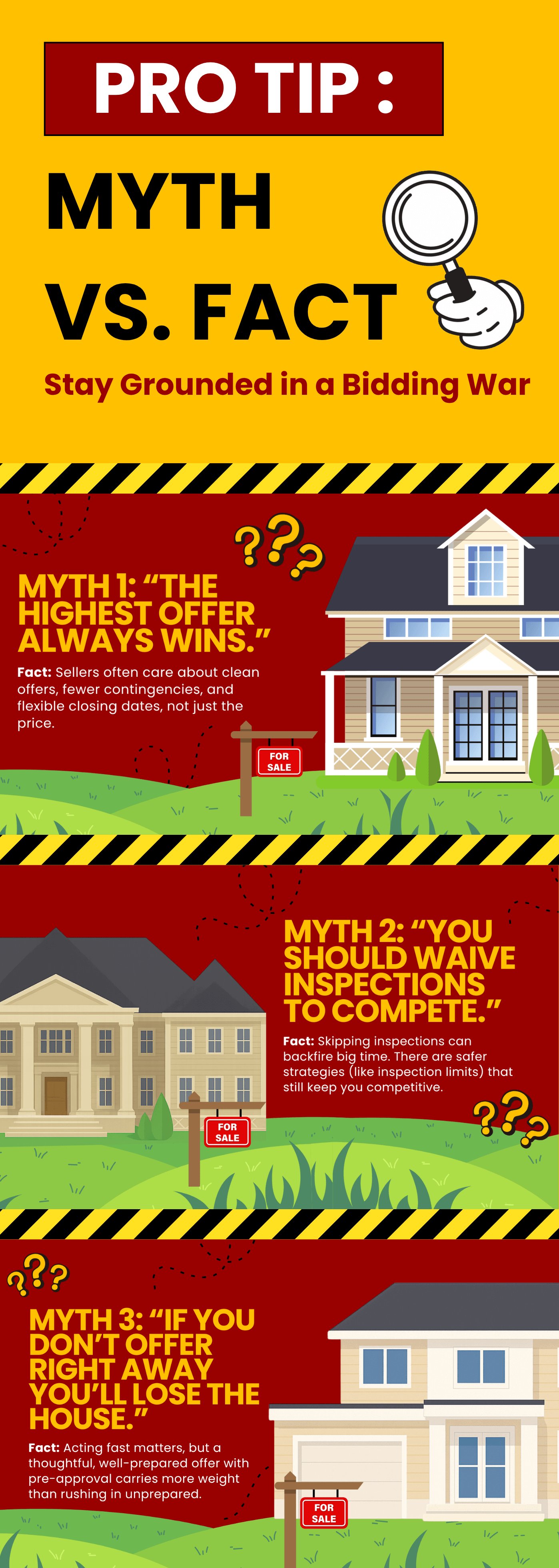
For sellers, it’s an ideal situation because they often receive multiple offers, sometimes above the asking price. This gives them the power to choose the one with the best overall terms, whether that means a higher offer, fewer contingencies, or a quicker closing timeline.
For buyers, a home bidding war can be stressful and fast-paced. It’s easy to get caught up in the pressure, especially when you’ve found a home you love. That’s why it’s important to have a clear game plan before jumping in.
What to Know Before Buying a House
Buying a home is arguably the biggest financial decision you’ll make, so you don’t want to skip any of the prep work. Here are the key steps to take before you start shopping:
1. Know What You Can Afford
Before anything else, answer the question: Can I afford to buy a house? Take a close look at your income, debt, monthly expenses, and savings for a down payment. You’ll also want to factor in ongoing costs like property taxes, insurance, maintenance, and HOA fees (if applicable). You should also consider using a budget calculator or mortgage affordability tool to help you find a realistic price range.
A good rule of thumb is to keep your monthly housing costs below 30% of your gross income.
2. Get Pre-Approved for a Mortgage
A mortgage pre-approval tells you exactly how much a lender is willing to offer and shows sellers that you’re a serious, qualified buyer. It can also speed up the process when you’re ready to make an offer. Just remember—being pre-approved doesn’t mean you have to spend the full amount.
3. Research the Market
Before making any decisions, explore the neighborhoods you’re interested in. Look into average home prices, school districts, commute times, amenities, and local trends. Sites like Redfin, Realtor.com, and local MLS listings can help you get a sense of how competitive the area is.
4. Understand Your Must-Haves vs. Nice-to-Haves
Create a list of features you need in a home— e.g., the number of bedrooms or a home office—and which ones you can live without. This will help you stay focused during your search and prevent emotional decision-making.
How to Bid on a House Without Losing Your Cool
In a competitive housing market, the pressure can build quickly. But when you’re in a home bidding war, staying calm, strategic, and financially grounded is key. Here’s how to bid on homes without losing your cool:
Know Your Maximum Budget (and Stick to It)
Before you even submit an offer, set a hard limit based on what you can comfortably afford. As mentioned earlier, try to keep your total monthly housing costs within 30% of your gross monthly income. This helps ensure you won’t regret your bid, no matter how competitive things get.
Lean on Your Agent
A good real estate agent can be your greatest asset. They’ll help you assess the property’s value, understand the seller’s priorities, and structure a compelling offer. Your agent can also help you craft a strong, competitive bid and guide you through trickier parts of the homebuying process, like counter-offers or escalation clauses (which automatically increase your offer if another one comes in higher).
Keep Emotions in Check
It’s easy to get swept up in the emotion of a bidding war, especially when it feels like your dream home is on the line.The key is preparation—know your budget, lean on trusted professionals, and don’t be afraid to walk away if a deal doesn’t make financial sense in the long run.
First-Time Homebuyer Mistakes to Avoid
Doing anything for the first time can lead to a few missteps, and buying a home is no exception. Here are some common first-time homebuyer mistakes and how to avoid them:
Stretching Your Budget Too Far
It’s tempting to reach for that dream home, even if it means going over budget. But spending too much can leave you with little wiggle room for costs like maintenance, upgrades, or emergencies. Just because you’re approved for a certain amount doesn’t mean you should spend it all. Stick to a price that fits comfortably within your monthly budget so you can enjoy your new home without financial stress.
Skipping the Home Inspection
Some buyers consider waiving the home inspection to make their offer more attractive. But that can be a risky move. Inspections help uncover hidden issues, like roof damage or plumbing problems, that could lead to expensive repairs later. Always know what you’re getting into before you commit.
Rushing the Process
Excited to move in? That’s totally normal, but buying a home is a major commitment. Skipping over key steps—like reviewing your loan terms, researching the neighborhood, or understanding HOA rules—can lead to regrets later down the road. Take the time to slow down, ask questions, and make sure you’re confident in every part of the process.
How to Win a Bidding War on a House—Smartly
When you’re in a home bidding war, emotions can run high, but you don’t have to throw your entire savings at the situation to come out on top. Here are some smart ways to help you win a bidding war:
Use an Escalation Clause
An escalation clause lets you automatically increase your offer if someone else outbids you up to a set limit. This shows you’re serious while helping you avoid overpaying right out of the gate. Just make sure your agent structures it carefully and includes your top cap.
Add a Personal Touch
A simple, sincere letter to the seller can make a big impact. Share why you love the home, what it would mean to you, and a little about who you are. It’s not a guarantee, but it can help you stand out in a sea of offers, especially if the seller has an emotional connection to the home.
Be Flexible on Closing
If your schedule allows, offer a flexible closing date that aligns with the seller’s needs. Whether that means a quicker closing or allowing them extra time to move, flexibility can be just as appealing as a higher price.
Home Insurance for First-Time Homebuyers
Most mortgage companies require proof of homeowners insurance before you can officially close on your new place. If you don’t have it lined up, your closing could be delayed.
That’s why it’s a good idea to start shopping for insurance early. A standard policy helps protect your home from risks like fire, theft, and certain types of water damage. It also includes liability coverage, which protects you if someone gets hurt on your property.
If you’re not sure what kind of coverage you need, don’t worry. At Mercury Insurance, we make it easy for first-time buyers to understand their options and find affordable protection that meets both your needs and your lender’s requirements.
Final Thoughts: Stay Calm, Be Prepared, and Protect Your Investment
If you find yourself caught in a bidding war, take a deep breath and remember that you don’t have to win at all costs. The best approach is to stay calm, stick to your budget, and rely on the prep work you’ve done.
If your offer gets accepted, don’t forget about homeowners insurance from Mercury. We’re here to help first-time buyers like you secure cheap home insurance that doesn’t cut corners on coverage.
Contact us today for a fast, free quote!

The Mercury Marketing Team is made up of professionals in the fields of Content Creation, Public Relations, Social Media and Journalism. The team works together to deliver professionally written and researched content to provide information for consumers.