

It’s no secret that buying a home is harder for millennials and Gen Z than it used to be, but how far are prospective buyers willing to go to make it happen? We surveyed 500 Gen Z and 500 Millennials who have never owned a home to better understand their sentiment toward the current housing market. Specifically, we wanted to know what life adjustments—from big to small—they’re willing to make to secure this cornerstone of the American Dream.
Key Findings
- About one-third of millennial and Gen Z non-homeowners (32%) say they’re unsure if they’ll ever own a home, and nearly all (97%) agree their generation faces a tougher path to homeownership than those before them.
- Despite that outlook, most are still willing to make meaningful trade-offs. Nearly three in four millennial and Gen Z non-homeowners (73%) say they would cut back on discretionary spending to afford a home, most commonly luxury items (73%) and food delivery (61%). Notably, more than half are also willing to give up alcohol, concerts, or sporting events if it means owning a home.
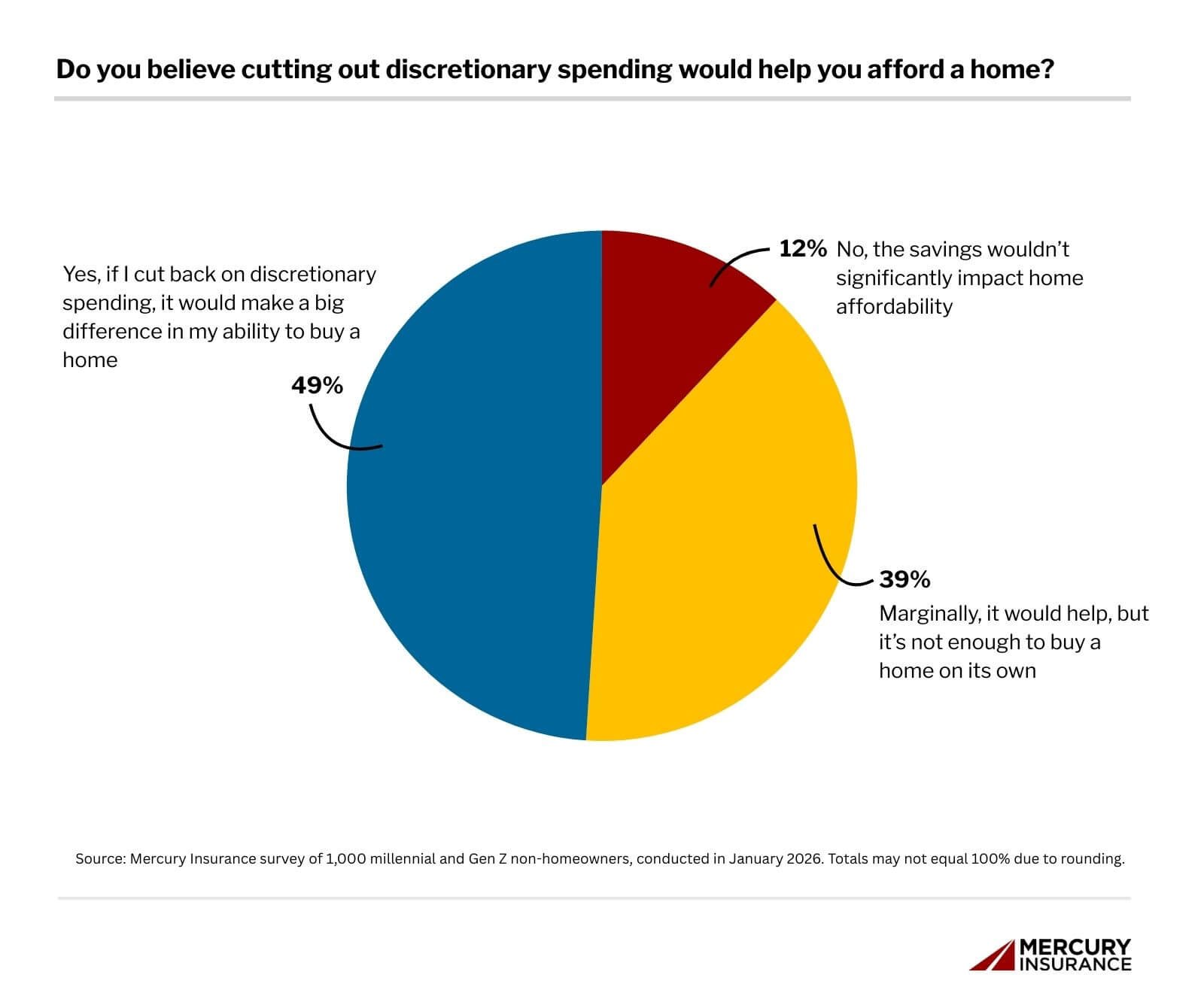
- Both generations are split on whether these sacrifices would actually move the needle. Nearly half (49%) believe cutting back on discretionary spending would meaningfully improve their ability to afford a home. But 51% say cutting back on discretionary spending would only somewhat or not at all help them achieve homeownership.
- Location flexibility is another major lever. About 42% of millennial and Gen Z non-homeowners would move farther from their desired area to afford a home, and 2 in 5 of these non-homeowners (38%) would be willing to live more than 30 miles from their preferred location for homeownership. Millennials show slightly more willingness to make long-distance moves, with 28% open to living 50 miles or more away, compared with 23% of Gen Z.
- Some life-stage sacrifices are also on the table, but not all of them. Roughly one-third of millennial and Gen Z non-homeowners (33%) say they would live with parents, delay having children, or take on a second job to become homeowners. However, respondents draw clearer boundaries around long-term professional investments, with fewer willing to delay continuing their education (19%).
One-third of millennials and Gen Z non-homeowners are uncertain or doubtful that they will ever be able to afford a home.
For many millennials and Gen Z Americans, the path to homeownership feels uncertain at best. About one-third (32%) say they aren’t sure they’ll ever be able to own a home, and nearly all (97%) agree their generation has it harder than those before them when it comes to buying one.
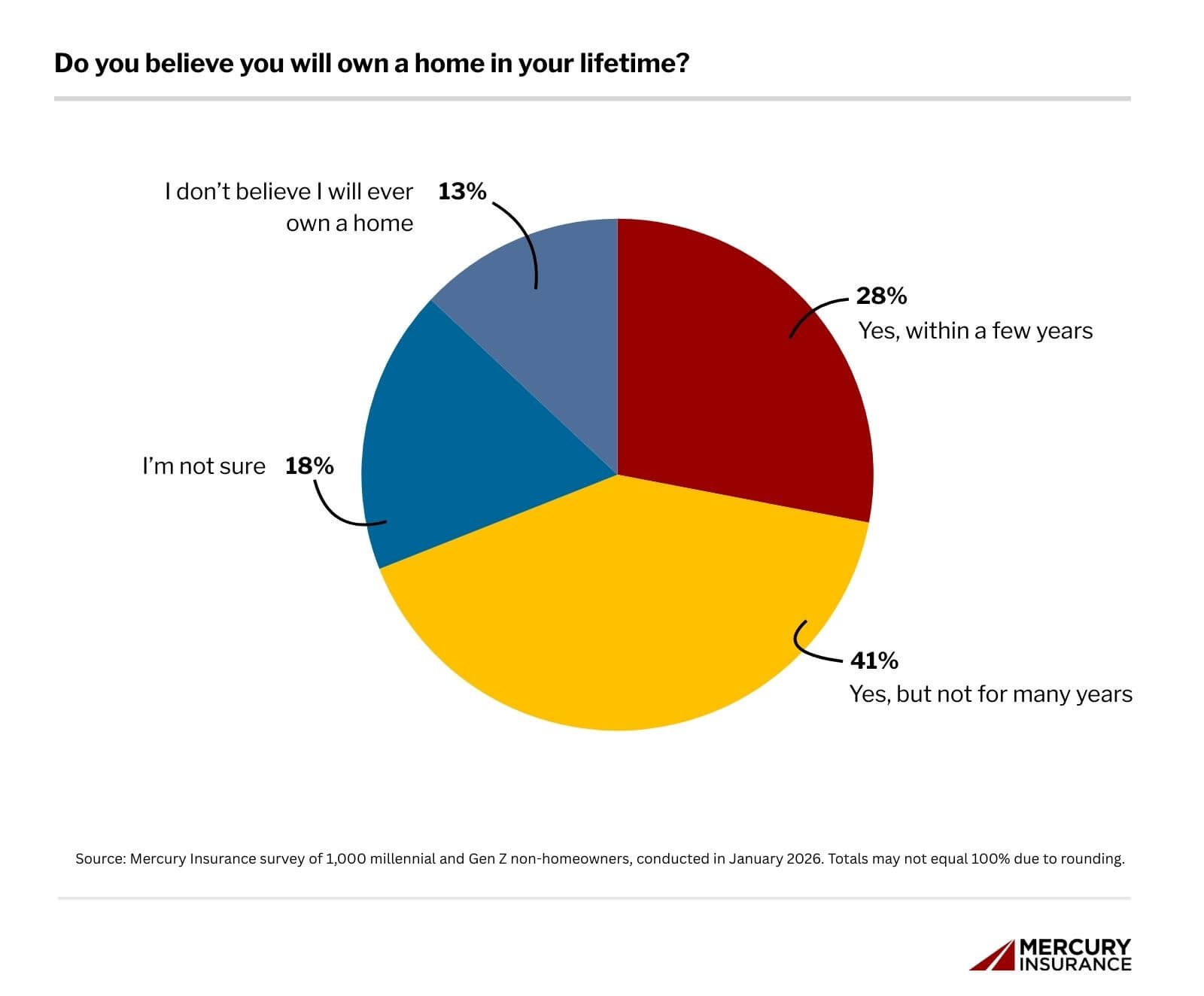
That skepticism becomes even clearer when respondents are asked about their long-term expectations. While a majority still believe they’ll own a home someday, confidence varies widely. Roughly 28% say they expect to buy within the next few years, while 41% believe homeownership is possible, but not for many years. At the same time, nearly one in five say they’re unsure, and 13% say they’ll probably never own a home at all.
That pessimism isn’t unfounded. While every prospective buyer faces obstacles, younger generations say the barriers to homeownership are especially steep today. When asked what’s standing in their way, three challenges ranked highest among both generations: high home prices, the rising cost of living, and elevated interest rates.
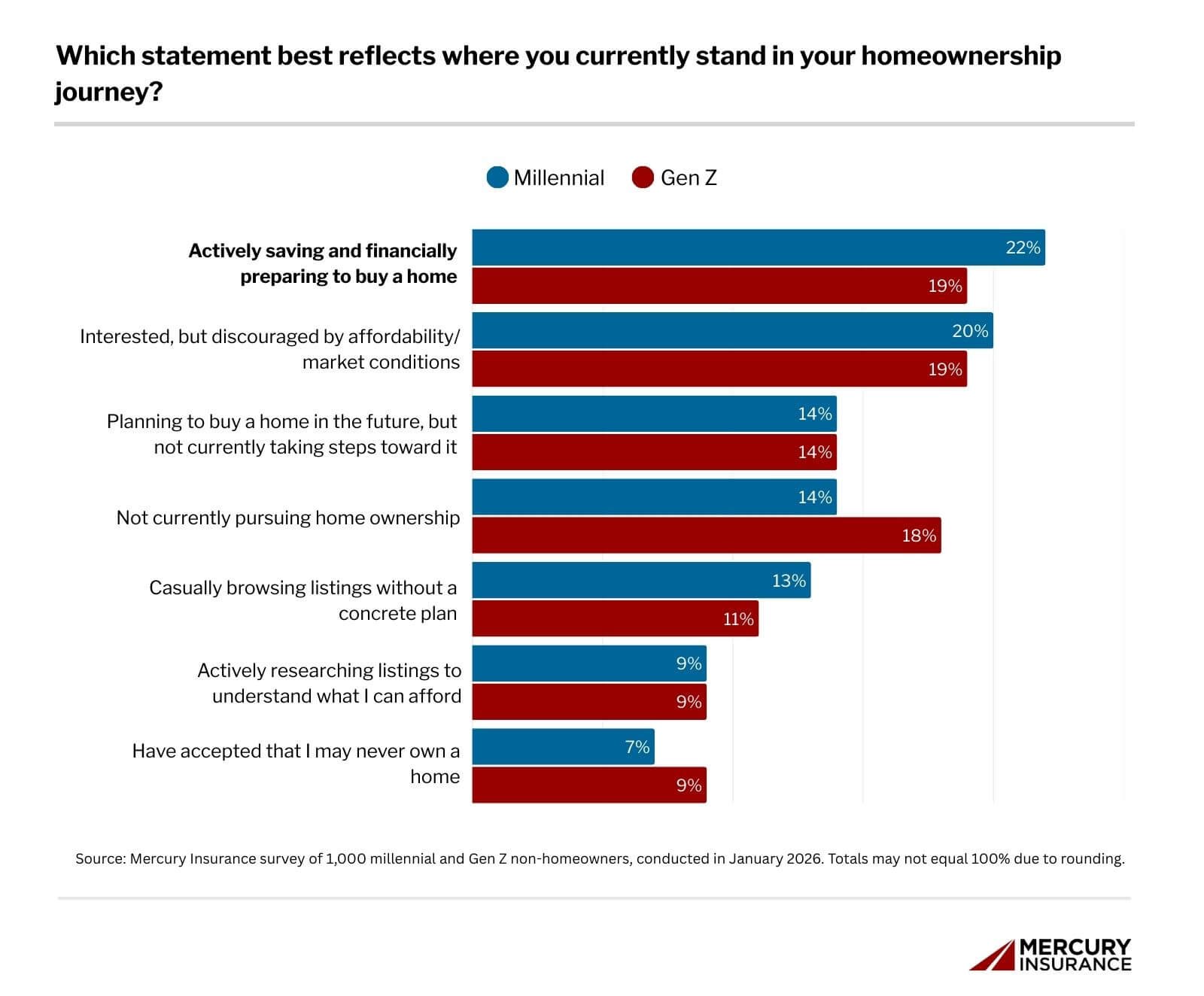
Those beliefs are shaping how young adults approach homeownership today. Only about one in five Millennials (22%) and Gen Z (19%) say they’re actively saving or financially preparing to buy a home. A similar share say they’re interested in owning but feel discouraged by affordability and market conditions. Others describe a more passive relationship with homeownership, browsing listings, planning for the distant future, or stepping back entirely from the idea of buying.
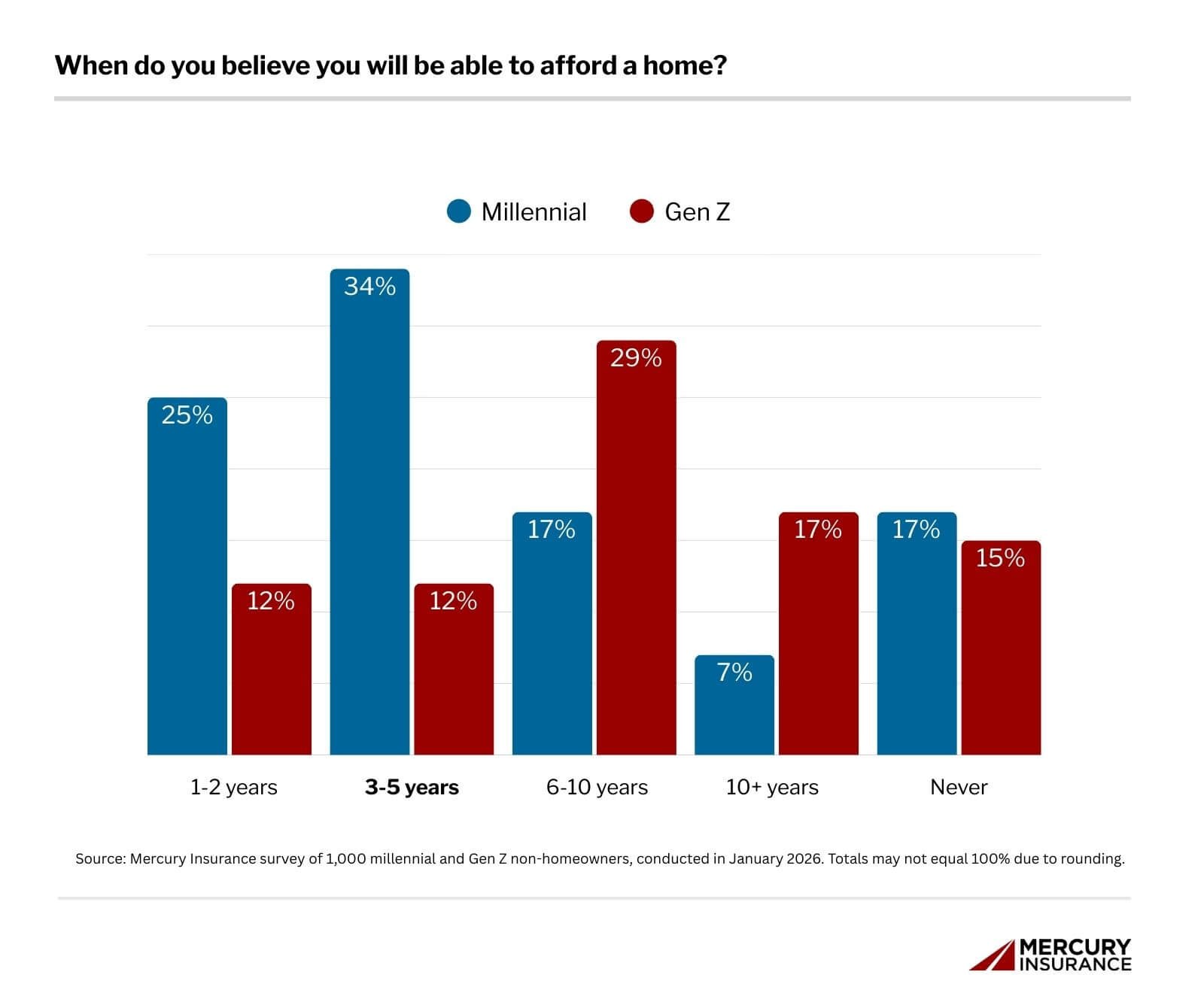
When asked to think more concretely about timing, expectations push even further into the future, particularly for Gen Z. Just 12% of Gen Z non-homeowners believe they could afford a home within the next two years, compared with 25% of Millennials. Instead, nearly half of Gen Z say homeownership is at least six years away, including 15% who don’t believe they’ll ever be able to afford a home. Millennials who are not homeowners are somewhat more optimistic, with one-third expecting to afford a home within 3 to 5 years.
Both generations are willing to cut back on discretionary spending, but many doubt it will be enough.
How far are millennials and Gen Z willing to go to become homeowners? The responses indicated far enough to make meaningful lifestyle sacrifices. A majority (73%) say they’re willing to cut back on discretionary spending to afford a home, making it the most acceptable trade-off among aspiring buyers.
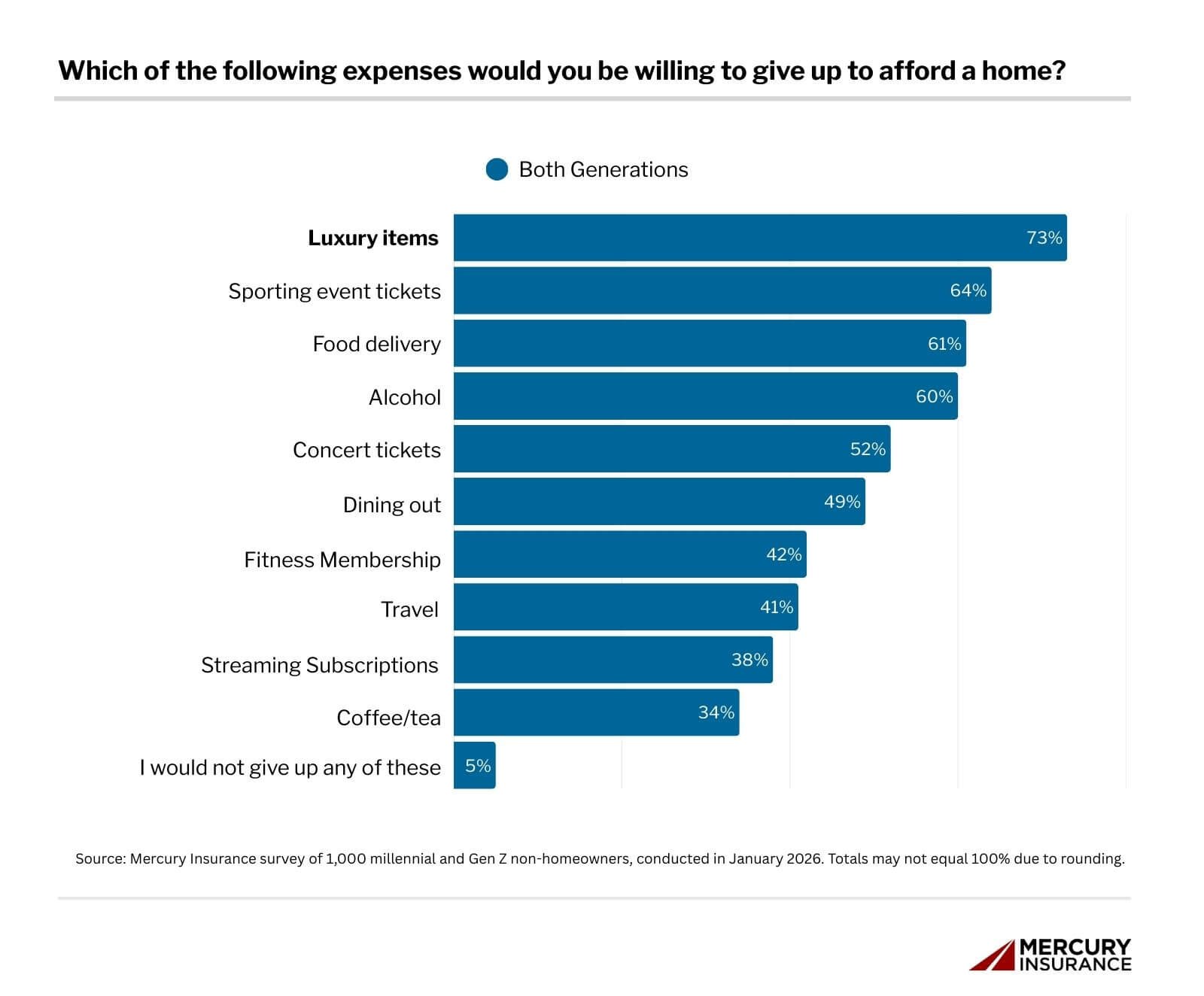
When asked what they’d be willing to give up, respondents point to non-essentials first. Luxury purchases top the list, with 73% willing to cut them out, followed closely by food delivery (61%). But the willingness to sacrifice goes beyond trimming convenience. More than half say they’d also give up alcohol, concerts, or sporting events if it meant becoming homeowners.
Nearly half (49%) believe cutting back on discretionary spending would meaningfully improve their ability to afford a home. But for many, the issue isn’t spending habits — it’s affordability itself. Over half (51%) say a home would remain out of reach even if they cut back on discretionary spending.
Location flexibility is becoming a key trade-off for millennial and Gen Z potential homebuyers.
Location has always played a central role in real estate, but our insights suggest that today’s aspiring buyers are increasingly willing to compromise on where they live to achieve homeownership.
In fact, most millennials and Gen Z say they’re open to relocating beyond their ideal location to afford a home. Half would consider living in a rural or suburban area, and 36% would be willing to live over 30 miles from their preferred location if it made homeownership possible. Only a small minority wouldn’t consider relocating at all in pursuit of more affordable housing.
While both generations show flexibility, there are subtle differences in how far they’re willing to go. Millennials appear slightly more open to long-distance moves, with 28% willing to live 50 miles or more from their preferred city, compared with 23% of Gen Z. Overall, the insights suggest that affordability pressures are pushing young buyers outward, reshaping expectations around proximity, commute, and location.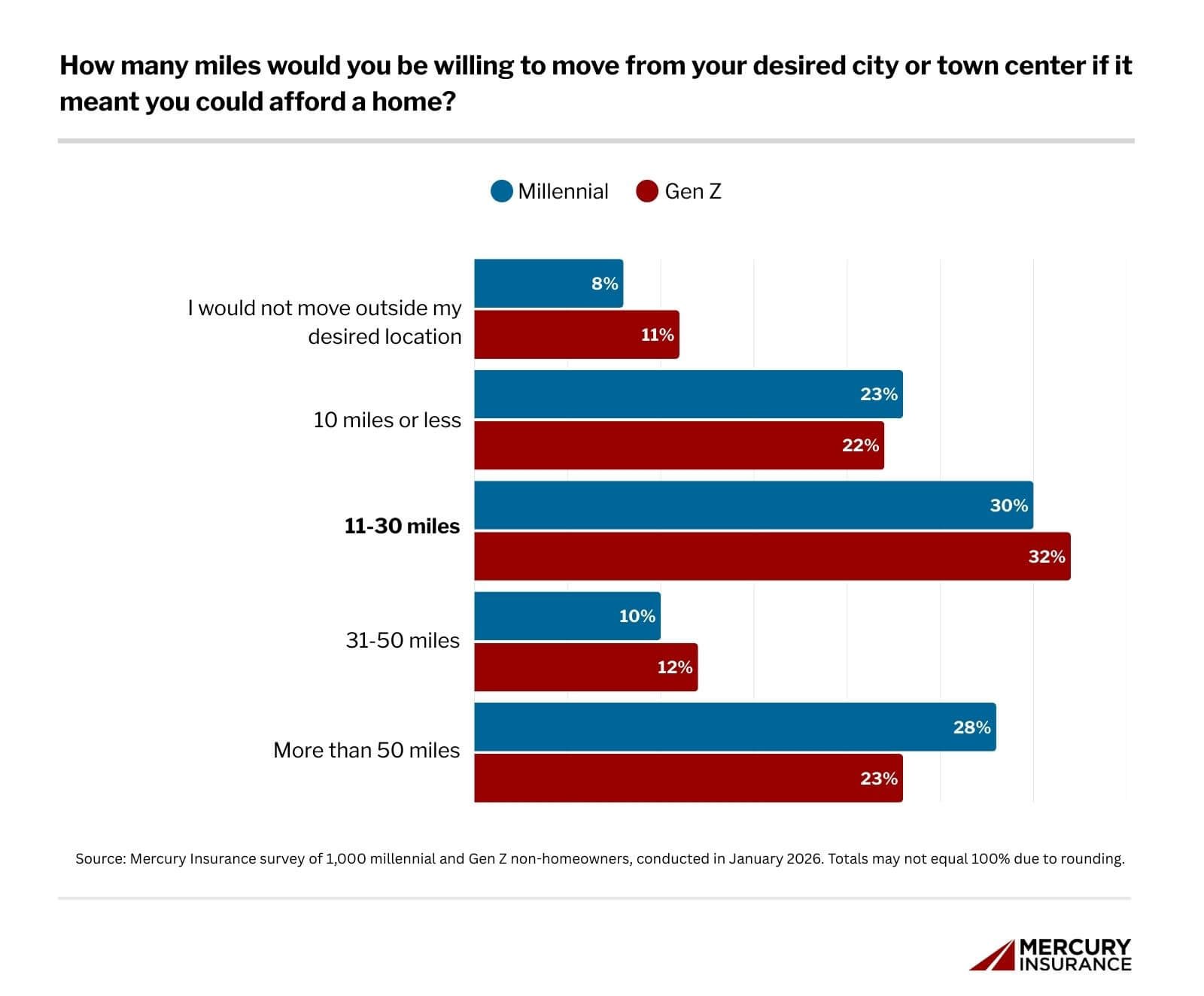
Gen Z and millennials also consider delaying marriage and having children to improve their chances of buying a home.
For many millennials and Gen Z non-homeowners, buying a home isn’t just a financial goal; it’s influencing the timing of major life decisions. About one-third say they’d be willing to delay having children or take on a second job if it meant owning a home, and 33% say they’d live with parents to improve their chances.
These trade-offs reflect a broader shift in priorities. Delaying marriage and starting a family are increasingly seen as flexible milestones, particularly when homeownership is seen as a prerequisite for long-term stability.
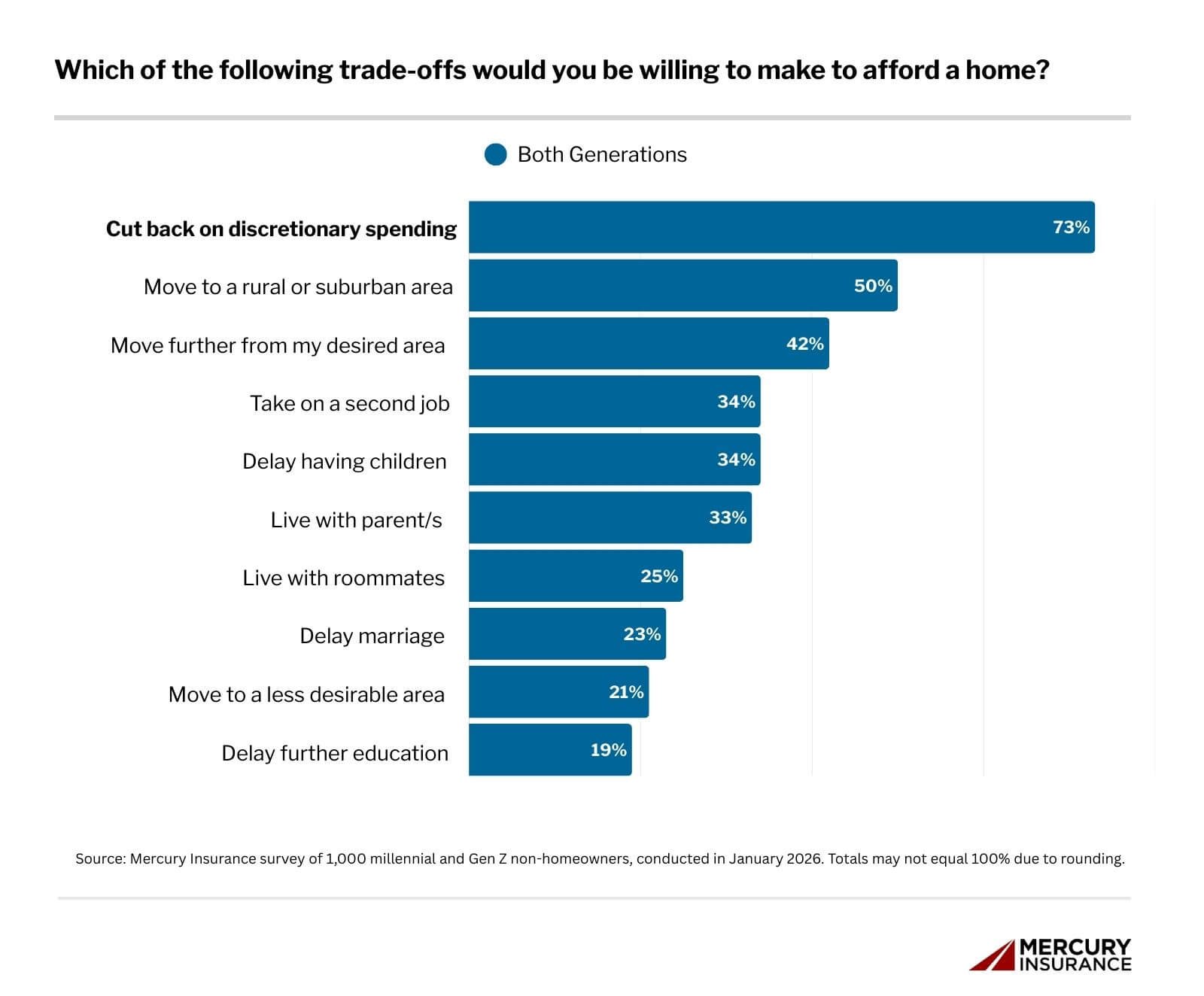
Still, respondents draw clear boundaries around certain sacrifices. When asked to name the one thing they would absolutely not do to become homeowners, moving to a less desirable area ranked highest, with 19% selecting it as a firm dealbreaker. Other non-negotiable trade-offs include living with roommates (15%), taking on a second job (14%), and living with parents (14%).
Methodology
We surveyed 1,000 Americans about their homeownership expectations and what they would be willing to trade off to become homeowners. Among them, 52% were millennials and 48% were Gen Z. The survey was conducted by a third-party research panel in the United States between January 5 and 7, 2026. Respondents were representative of the population by age, gender, and region. All figures are based on weighted data and are subject to rounding.

The Mercury Marketing Team is made up of professionals in the fields of Content Creation, Public Relations, Social Media and Journalism. The team works together to deliver professionally written and researched content to provide information for consumers.