


Right in the heart of Tornado Alley, Oklahoma averages more than 50 tornadoes each year, according to the state’s emergency management office. And while they’re most common in the spring, tornadoes can appear anytime throughout the year, if conditions are right. That raises an important question for Oklahoma residents: Does homeowners insurance cover tornadoes?
Here’s everything you need to know about these prolific storms, along with the coverage — and the limitations — of home insurance.
Why Tornado Risk Is Higher in Oklahoma
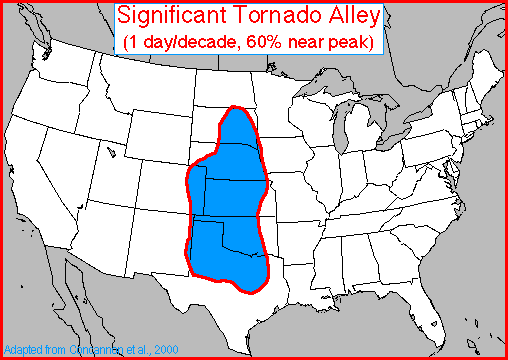
Tornado Alley extends from Texas all the way up through portions of North Dakota. However, Oklahoma sits in the bull’s-eye of this semi-defined region where warm, moist air from the Gulf collides with cooler, drier air from the Rockies and Canada. This confluence creates the perfect environment for supercell storms capable of producing tornadic activity.
In fact, in 1999, the Bridge Creek-Moore tornado produced wind speeds of up to 321 mph, the strongest wind speeds recorded to date. Due to its impact on the Oklahoma City, Bridge Creek, and Moore communities, it was the first time the National Weather Service ever used a tornado emergency statement. The storm’s damage was estimated to cost between $1 and $2 billion.
Even today, the state consistently ranks among the top in the U.S. for tornado frequency and intensity. The elevated risk influences not only how homes are built, but also how insurers price and structure homeowners insurance policies in Oklahoma. Higher risk often means higher premiums, stricter underwriting, and closer assessment of coverage limits.
Are Tornadoes Covered by Insurance?
In most cases, yes, a standard homeowners insurance policy covers tornado damage. Tornadoes are considered a type of windstorm, which is typically a named peril under most policies. Coverage usually falls under three main categories:
Dwelling coverage for tornado damage
Dwelling coverage pays to repair or rebuild the physical structure of a home damaged by a tornado. This coverage usually pays for damaged windows and doors, exterior walls, roofing and siding, and often attached structures like decks or garages.
If a tornado partially damages your home, your policy may cover repairs up to your dwelling limit. If your home is completely destroyed, coverage can help pay for reconstruction, assuming your limit reflects the current cost to rebuild, not the home’s market value.
Personal property damage after a tornado
Personal property coverage applies to the belongings inside your home, from your TV and furnishings to clothing and appliances. Policies typically reimburse you for personal property either on an actual cash value (ACV) basis, which factors in depreciation, or on replacement cost, which pays what it would cost to buy a similar item today. The difference can be significant after a large loss, so it’s worth checking to see which option your policy uses.
Loss of use if your home is unlivable
If a tornado leaves your home uninhabitable, loss of use (also called additional living expenses) coverage can help pay for temporary housing, meals, and other necessary expenses while repairs are made.
What Tornado Damage Is Not Covered?
Tornado damage itself is usually covered, but certain types of related damage may not be.
Flooding vs. wind damage
Let’s say a tornado tears off your roof, and rain pours in. That type of water damage is typically covered. But if rising water from heavy rainfall or overwhelmed drainage systems floods your home, that damage would require a separate flood insurance policy. So while homeowners insurance covers the wind damage from the tornado, it won’t cover certain types of flooding — even if that flooding occurs at the same time.
Coverage limits and exclusions
Keep in mind that covered damage is subject to policy limits and exclusions. For instance, wind and hail deductibles may be higher than your policy’s standard deductible. You also may have sub-limits on items such as electronics and jewelry, and there may be exclusions for detached structures (i.e., a greenhouse, gazebo, or deck) that are not listed on your policy. If you live in Oklahoma, be sure you understand exactly what’s covered and what’s not.
Do You Need Separate Tornado Insurance in Oklahoma?
There’s no such thing as a standalone “tornado insurance” policy. Your tornado coverage is built into your standard homeowners insurance through windstorm protection. However, depending on your location and your insurer, you may have higher wind deductibles than those in lower-risk areas, and your insurer may require roof upgrades for coverage eligibility.
“Most standard homeowners insurance policies cover tornado-related damage, but coverage details can vary. Reviewing your policy limits and deductibles ahead of storm season can help you better prepare for severe weather risks,” says Adam Bakonis, Sr. Manager, Product Management.
How Tornadoes Affect Homeowners Insurance Costs
Several factors influence how much you’ll pay for homeowners insurance in tornado-prone areas, including:
- Your home’s age, construction materials, and roof type
- Proximity to past tornado activity
- Local building codes and mitigation features (like a reinforced roof)
- Coverage limits and deductible choices
Homes with impact-resistant roofing, storm shelters, or reinforced construction also may qualify for discounts with some insurers.
What to Do After Tornado Damage
Knowing what to do in the immediate aftermath of a tornado can help you get back on your feet faster.
File a homeowners insurance claim
Contact your insurance company to report the damage as soon as possible. Many insurers allow claims to be filed online or through mobile apps, which can be helpful after widespread natural disasters when call volumes are high.
Provide a clear description of the damage, and ask about next steps, including inspections, temporary repairs, and documentation requirements.
Document damage safely
Before you start making permanent repairs, document everything. Take photos and videos of visible damage to your home and belongings as long as you can do so safely. If temporary repairs are needed to prevent further damage — such as covering a roof opening — keep receipts, as these costs may be reimbursable.
How to Prepare Your Home Before Tornado Season
Preparation can’t stop a tornado, but it can reduce damage and improve your safety and your insurance outcome. Here are a few simple ways to prepare:
- Reinforce garage doors and roofing materials.
- Trim trees and secure outdoor items.
- Create a home inventory with photos, videos, and serial numbers.
- Review your policy to ensure coverage limits match rebuilding costs.
- Have a family emergency plan and a disaster kit in the event of a catastrophic tornado.
Review Your Oklahoma Homeowners Coverage Before the Next Storm
Tornadoes are unpredictable, but your insurance coverage doesn’t have to be. Reviewing your homeowners policy before tornado season gives you a chance to address gaps, adjust limits, and understand deductibles, before you ever need to file a claim. Contact Mercury Insurance for a fast, free homeowners insurance quote today.

Adam Bakonis is a Senior Product Manager for Mercury Insurance, overseeing homeowners and landlord products for California. Bakonis originally joined Mercury as a casualty adjuster and has worked in multiple roles, including claims examiner, property field adjuster, claims project and analytics manager.

The Mercury Marketing Team is made up of professionals in the fields of Content Creation, Public Relations, Social Media and Journalism. The team works together to deliver professionally written and researched content to provide information for consumers.