

Driving in Oklahoma means navigating some of the most dynamic weather conditions in the country, and the conditions drivers face in January look very different from those in May or August.
To show how those risks shift throughout the year, Mercury Insurance analyzed 22,731 Oklahoma storm records from the NOAA National Centers for Environmental Information Storm Events Database, covering 2016 through the partial 2026 data available as of August 24, 2026.
The clearest takeaway is that drivers do not need to prepare for every hazard at once. Hail is the main spring concern, wind becomes more common in early summer, extreme heat leads later in the season, and winter weather matters most at the start of the year. Knowing when each risk is most common can help drivers time vehicle checks, parking plans, and coverage reviews more thoughtfully.
|
Note on the data: a storm-event record is not the same as one unique storm or an insurance claim. NOAA may document the same weather system through multiple records across different places or times. These findings are most useful for comparing patterns in reported activity, not predicting whether a particular driver will experience damage. |
Key Findings: Oklahoma Weather Statistics
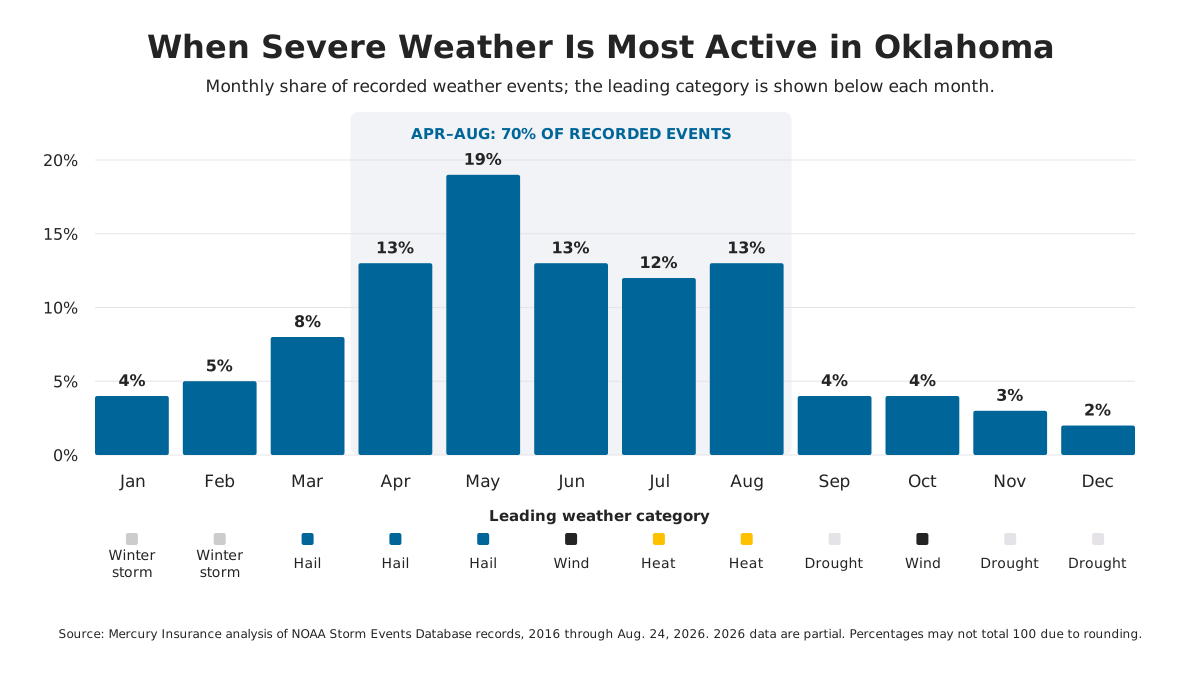
- Oklahoma’s most active weather period runs from April through August. Together, these five months accounted for 70% of all recorded events in the analysis.
- May had the most weather events, with nearly one in five weather events recorded in May alone. April, June, and August followed at 13% each.
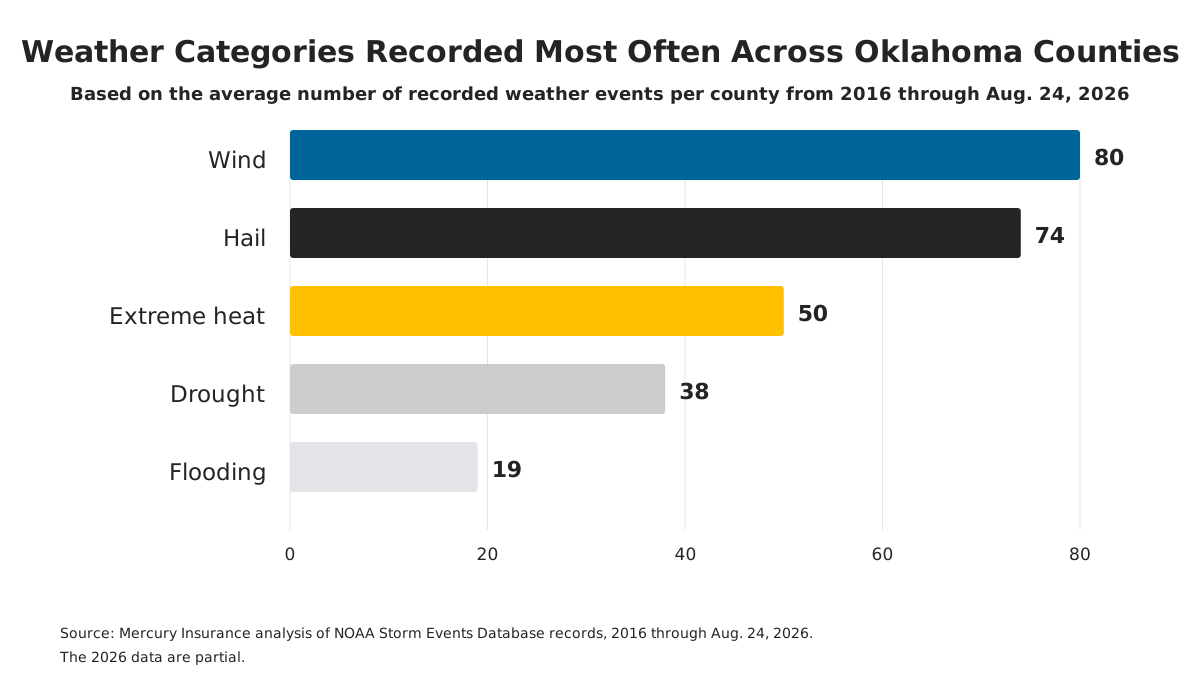
- From 2016 through August 24, 2026, the average Oklahoma county recorded 80 wind-event records—equivalent to roughly 7.5 per year. Hail followed as the second-most frequently recorded category.
- Oklahoma’s most frequently recorded weather hazards often shift with the seasons. Winter storms led in January and February, hail from March through May, wind in June and October, extreme heat in July and August, and drought in September, November, and December.
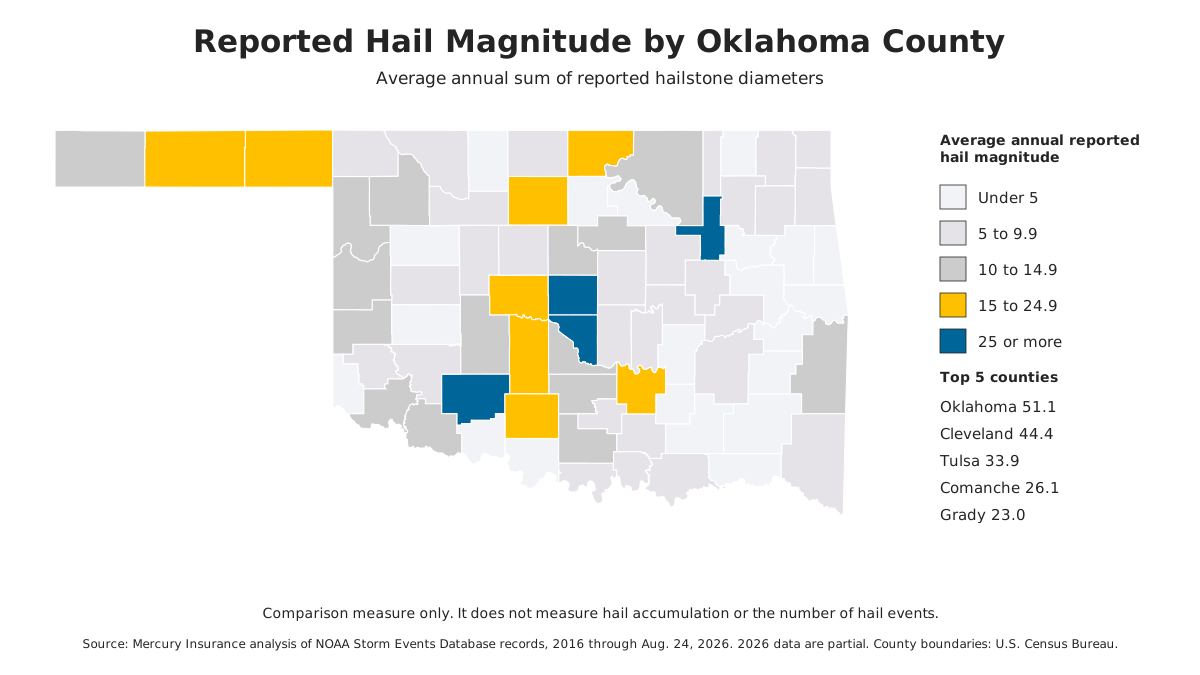
- Oklahoma County ranked highest for reported hail magnitude, followed by Cleveland, Tulsa, Comanche and Grady counties. NOAA reports hail magnitude as the diameter of a hailstone measured in inches.
The most common severe weather events in Oklahoma
Despite Oklahoma’s close association with tornadoes, wind was the state’s most frequently recorded severe weather category in the analysis. From 2016 through August 24, 2026, the average Oklahoma county had 80 wind-event records, equivalent to roughly 7.5 per year. For this analysis, high wind, strong wind and thunderstorm wind were grouped under “wind.”
Hail followed with 74 records per county, equivalent to about seven records per year. Extreme heat ranked third with 50 records per county, followed by drought with 38 and flooding with 19. Tornadoes did not rank among the five most frequently recorded categories by this measure.
How Oklahoma weather can affect drivers and vehicles
- Hail: Dents and damage to windshields, roofs, hoods, and body panels.
- Wind: Difficult handling, blowing debris, falling limbs, and reduced visibility.
- Flooding: Road closures, hydroplaning, and potential water damage to a vehicle.
- Tornado: Extreme wind, debris, and potentially extensive vehicle damage.
- Winter weather: Reduced traction, longer stopping distances, and limited visibility.
- Extreme heat: Added stress on batteries, tires, and cooling systems.
- Wildfire: Smoke, reduced visibility, road closures, and evacuation traffic.
- Fog: Reduced visibility and a greater need for following distance.
Oklahoma’s Severe Weather Calendar By Month
The calendar shows a clear concentration of activity from April through August. Those five months accounted for 70% of recorded events, and May alone represented 19%. April, June, and August followed at 13% each.
The type of weather changes almost as clearly as the volume. Winter storms lead in January and February before hail takes over from March through May. Wind becomes the top category in June, followed by extreme heat in July and August. Activity falls sharply in September, but drought and wind remain the leading categories through the end of the year. For drivers, that means the preparation window starts before spring and should shift with the season rather than ending after tornado season.
A seasonal vehicle-preparation plan for Oklahoma drivers
January and February: winter road conditions
Winter storms were the leading category in January and February. Oklahoma does not need weeks of snow for roads to become difficult. During the January 2026 winter storm, state officials reported 192 collisions, including 31 injury collisions, along with 48 abandoned vehicles and 241 motorist assists.
The response also shows why conditions can remain uneven after precipitation stops. Despite an extensive effort to treat and clear roads during the same storm, melting snow repeatedly refroze into black ice overnight and in shaded areas.
Drivers should check conditions again before the return trip, and never assume a road that was clear earlier will stay that way.
Here are three important things to keep in mind during winter months:
- Check the road, not only the forecast. okroads.org and the Drive Oklahoma app show closures and near-real-time snowplow-camera images, including views from rural routes where conditions may differ from the nearest city.
- Watch for refreezing on bridges, ramps, and shaded stretches. These surfaces often freeze first.
- Give road-clearing crews real space. ODOT recommends staying at least 200 feet behind snowplows and not passing them.
March through May: hail preparation
Spring is when hail preparation and education are especially important.
Oklahoma ranked third in the nation for major hail events in 2025, with 369 events involving hailstones at least 1 inch in diameter, according to the Insurance Information Institute.
Here are some things to keep in mind during these months:
- Check the outlook before a longer drive. Once storms approach, use local NWS warnings for immediate decisions in addition to monitoring local news broadcasts.
- If hail begins while you are driving, pull fully off the road in a safe location and stay inside the vehicle. ODOT advises drivers not to shelter under an overpass or in a ditch, where stopped traffic or rising water can create a second hazard.
- If the vehicle is damaged, be sure to capture photographs if and when safe to do so. Photograph the hailstones beside a ruler or another object for scale, then capture wide and close views of the vehicle before moving it or beginning repairs. Save the warning time and location as well. Those details give the insurer a clearer record of what happened and can reduce back-and-forth during the claim review.
For a fuller checklist, Mercury’s guide explains how to protect your car from wind and hail before a storm and what to document afterward.
June: wind and debris
By June, the pattern shifts from hail to wind. Before leaving, check for active warnings, downed-tree reports, and road closures. The Oklahoma Mesonet app can also help drivers compare current wind conditions across nearby stations. On the road, slow down when crosswinds affect steering, leave extra room around trucks and other high-profile vehicles, and never drive across downed utility lines.
July and August: heat-related maintenance
The focus changes again in July and August, when extreme heat becomes the leading category. Heat often reveals a weak battery before the first cold snap and can worsen tire-pressure problems or cooling-system issues. A battery test, tire inspection, and coolant check at the start of this stretch are more useful than waiting for a warning or a breakdown.
For more tips, visit Mercury’s resource on protecting your car from sun damage and hot weather.
September through December: changing conditions
Fall brings fewer recorded events overall, but it is not a weather-free period. Drought leads in September, November, and December, while wind returns as the top category in October. Dry vegetation, smoke, and sudden wind shifts can affect visibility and road access, so local alerts still matter even after the spring and summer peak has passed.
Mercury’s guide on how to protect your car from wind and hail provides additional steps for sheltering a vehicle and documenting damage.
The leading severe weather category by Oklahoma county
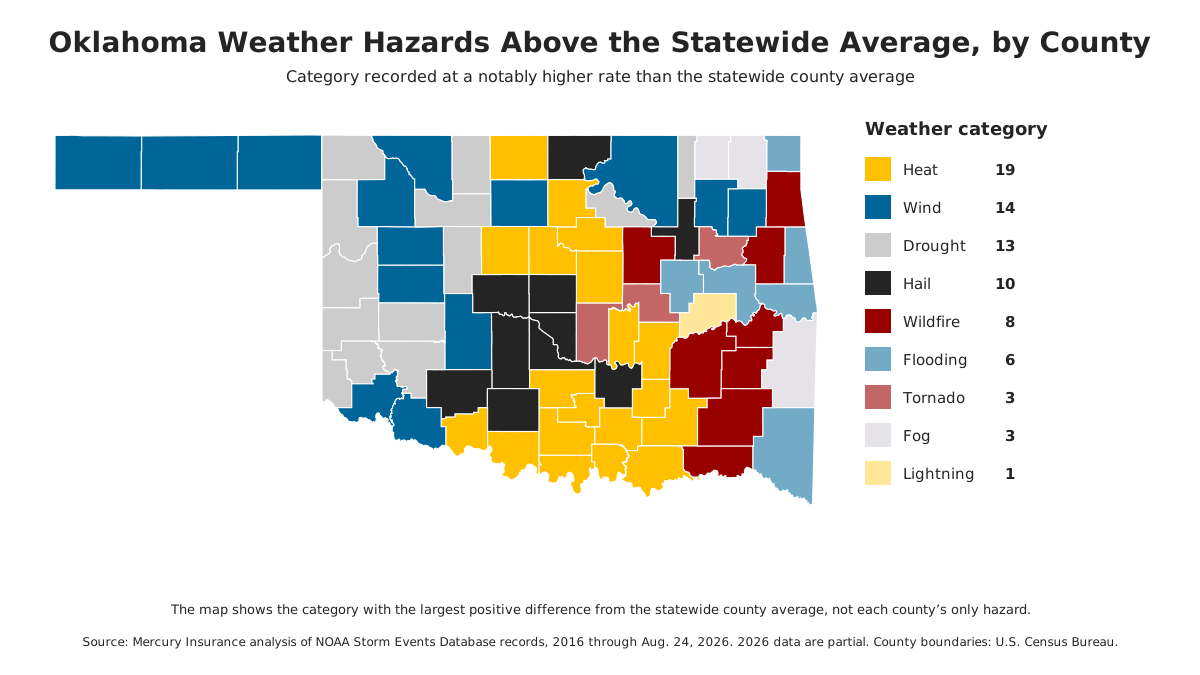
To compare counties fairly, the analysis first calculated the average total number of records per county across the full analysis period for each weather category statewide. It then compared each county’s full-period total with that benchmark. The category with the largest positive difference was labeled the county’s leading relative threat.
In other words, the map shows which hazard stands out locally, not the only severe weather a county experiences.
Heat stood out in the most counties, leading in 19. Wind led in 14 counties, drought in 13, and hail in 10. Flooding, wildfire, tornado, fog, and lightning led in the remaining counties.
|
How to read the county result “Leading” does not mean the category is the county’s only hazard or that every event is severe enough to damage a vehicle. It identifies the event type that was most elevated relative to the statewide county benchmark used in this analysis. |
Oklahoma’s Hail Magnitude Hotspots
Oklahoma County ranked highest on the reported hail magnitude measure, with an average annual summed diameter of 51.1 inches. Cleveland County followed at 44.4 inches, followed by Tulsa at 33.9 inches, Comanche at 26.1 inches and Grady at 23 inches. Three of the five highest-ranking counties are in central Oklahoma, although Tulsa and Comanche show that elevated reported hail magnitude was not limited to one region.
NOAA reports hail magnitude as the diameter of a hailstone measured in inches. To compare counties, the analysis totaled the hailstone diameters documented in NOAA reports for each county and calculated the average annual total. A county can rank highly because it had more hail reports, larger reported hailstones or a combination of both. The measure does not represent the number of distinct hailstorms or the amount of hail that accumulated on the ground.
Does Oklahoma car insurance cover weather damage?
Weather damage to a driver’s own vehicle is generally associated with comprehensive coverage, not the liability coverage required to drive in Oklahoma. Comprehensive coverage may help pay for covered damage from hail, flooding, fire, falling objects, and windblown debris, subject to the policy’s terms, limits, and deductible. Collision coverage may apply in a different situation, such as sliding on ice and striking another vehicle or object. Drivers should check their declarations page or speak with an insurance professional rather than assume either coverage is included.
This is where weather preparation and a coverage review overlap. Drivers comparing Oklahoma auto insurance can use Mercury’s state-specific guide to review required liability limits and available optional coverages. An annual review should confirm whether comprehensive and collision are included, what each deductible would require out of pocket, and whether roadside assistance or rental-car coverage fits the way the vehicle is used.
Methodology
Mercury Insurance analyzed 22,731 Oklahoma storm-event records dated from 2016 through Aug. 24, 2026, in the supplied NOAA National Centers for Environmental Information Storm Events Database. The 2026 data are partial. Related NOAA event classifications were grouped into broader categories. For example, high wind, strong wind, and thunderstorm wind were combined as “Wind,” while multiple winter-weather classifications were combined as “Winter Storm.”
For the statewide category comparison, Mercury calculated the average total number of records per county across the full analysis period. The figures are not annual averages.
For hail, Mercury separately analyzed NOAA hail reports by county. NOAA records hail magnitude as hailstone diameter in inches. Mercury totaled the reported diameters in each county and averaged that total by year. This measure supports relative county comparisons; it is not a hail-event count or a measure of hail accumulation.
What to Do After Weather Damages Your Car
The Oklahoma Insurance Department gives similar guidance after major storms: document the damage, limit initial work to necessary temporary repairs, keep receipts, and ask the insurer what forms or information it needs.
Step 1: Start with Safety
Do not approach downed power lines, enter moving floodwater, or stand near unstable trees and structures. If the vehicle is in a hazardous location, contact emergency services before focusing on the damage.
Step 2: Document the Scene Before Cleanup
Take wide and close photos of the vehicle, its surroundings, debris, and any visible water line. Record the location and approximate time while the details are fresh.
Step 3: Contact the Insurer Before Permanent Repairs
Ask what documentation is required, how the deductible applies, and whether the vehicle needs an inspection. Make only safe, temporary repairs needed to prevent further damage.
Step 4: Keep the Paperwork Together
Save estimates, receipts, claim numbers, and notes from conversations so the timeline is easy to follow.
Frequently Asked Questions
What is the most active month for severe weather in Oklahoma?
May was the most active month in Mercury’s analysis, accounting for 19% of all Oklahoma storm-event records in the dataset.
When is hail season in Oklahoma?
Hail was the leading recorded severe-weather category from March through May. May had the largest share of all storm events in the analysis.
What is the most common severe weather in Oklahoma?
Across the full analysis period, the average Oklahoma county recorded 80 wind-event records, followed by 74 hail records, 50 extreme heat records, 38 drought records and 19 flooding records. These are full-period totals, not annual averages.
Which Oklahoma county had the highest reported hail magnitude?
Oklahoma County ranked first for reported hail magnitude, followed by Cleveland and Tulsa counties. This measure is based on the average annual sum of reported hailstone diameters and does not represent hail accumulation or the number of hail events.
Does liability insurance cover hail damage?
Liability coverage generally pays for covered injuries or property damage a driver causes to others. It does not generally pay for hail damage to the policyholder’s own car. That type of non-collision loss is commonly associated with comprehensive coverage, subject to policy terms and the deductible.
Does comprehensive car insurance cover flood damage?
Comprehensive coverage may cover vehicle damage caused by flooding, subject to the policy’s terms, exclusions, limits, and deductible. Drivers should never enter floodwater to protect a vehicle.
Should I file a claim for hail damage?
Document the damage and contact the insurer or agent to understand the claims process, deductible, and repair options. Whether a claim is appropriate depends on the damage, repair cost, and policy terms.

The Mercury Marketing Team is made up of professionals in the fields of Content Creation, Public Relations, Social Media and Journalism. The team works together to deliver professionally written and researched content to provide information for consumers.